Textual AB · UX research · 2022

Five journey maps that got pain points fixed within days

Textual had never worked with a UX designer. I interviewed six of their e-commerce clients and turned what I learned into customer journey maps that the team could act on right away.

Client
Textual AB (textual.ai)
My role
UX Designer: UX research and customer journey mapping
Team
Independent project, with a closing workshop with Textual’s CEO and CSO
Year
2022
Customer journey maps for Textual’s clients

Results

6

client companies interviewed, including Gina Tricot, NA-KD, Royal Design and John Lewis

5

customer journey maps, one per client workflow instead of the one map that was planned

Days

from a finished map to fixed pain points for several clients

2 months

from plan to final workshop, run independently

Henrik Gemoll

Founder & CEO, Textual AB

“Sofia has approached this project with high professionalism, ambition, and attention to detail. She independently planned and conducted user interviews where central processes were mapped step by step. The results were presented as clear Customer Journey Maps that provided valuable insights for continued development. It has been a pleasure having Sofia as part of the team, and we highly recommend her to future employers and collaborators.”

Client & vision

Textual is an AI platform that automates large-scale content creation and translation for e-commerce companies, so they can generate and manage thousands of product texts across many markets.

Business goals:

  • Win more large enterprise e-commerce clients
  • Become embedded in retailers’ content workflows
  • Reduce content production costs for customers
  • Position the platform as core infrastructure for e-commerce content
  • Expand globally across retailers and languages
The Textual logo on a colourful gradient

Problem statement

Textual had never had a UX designer. The product was powerful and highly customisable, but the team lacked insight into how customers actually used it, where they hit friction and which parts of the workflow created the most value.

That led to inefficient onboarding and training, a risk of misaligned product decisions and difficulty scaling to new clients.

Goal

Run a user research project and present the findings in a clear visual overview that:

  • identifies critical touchpoints in the customer journey
  • shows how users interact with the tool
  • shows where users struggle, feel confused or hit technical errors
  • suggests immediate improvements
  • guides future product development and UX work

Process & strategy

I planned and ran the project independently over two months.

  1. 01

    Define

    • Business goals and vision
    • Define problems
  2. 02

    Plan

    • Build hypotheses
    • Plan interviews
  3. 03

    Discovery

    • Desk research
    • Look through previous feedback
    • Get to know the product
    • Internal demo: how clients were introduced to and trained in the tool
  4. 04

    Research

    • Interviews with six client companies: Rum21, Gina Tricot, NA-KD, Royal Design, John Lewis and Teknikdelar
  5. 05

    Process

    • Digest data and list improvements
    • Create infographics
  6. 06

    Understanding

    • Build a deeper understanding of the application’s structure and functionality
  7. 07

    Delivery

    • Present the findings
Sketches, whiteboard notes and early drafts of the journey maps
From sketches and whiteboard notes to the first drafts of the maps.

Result

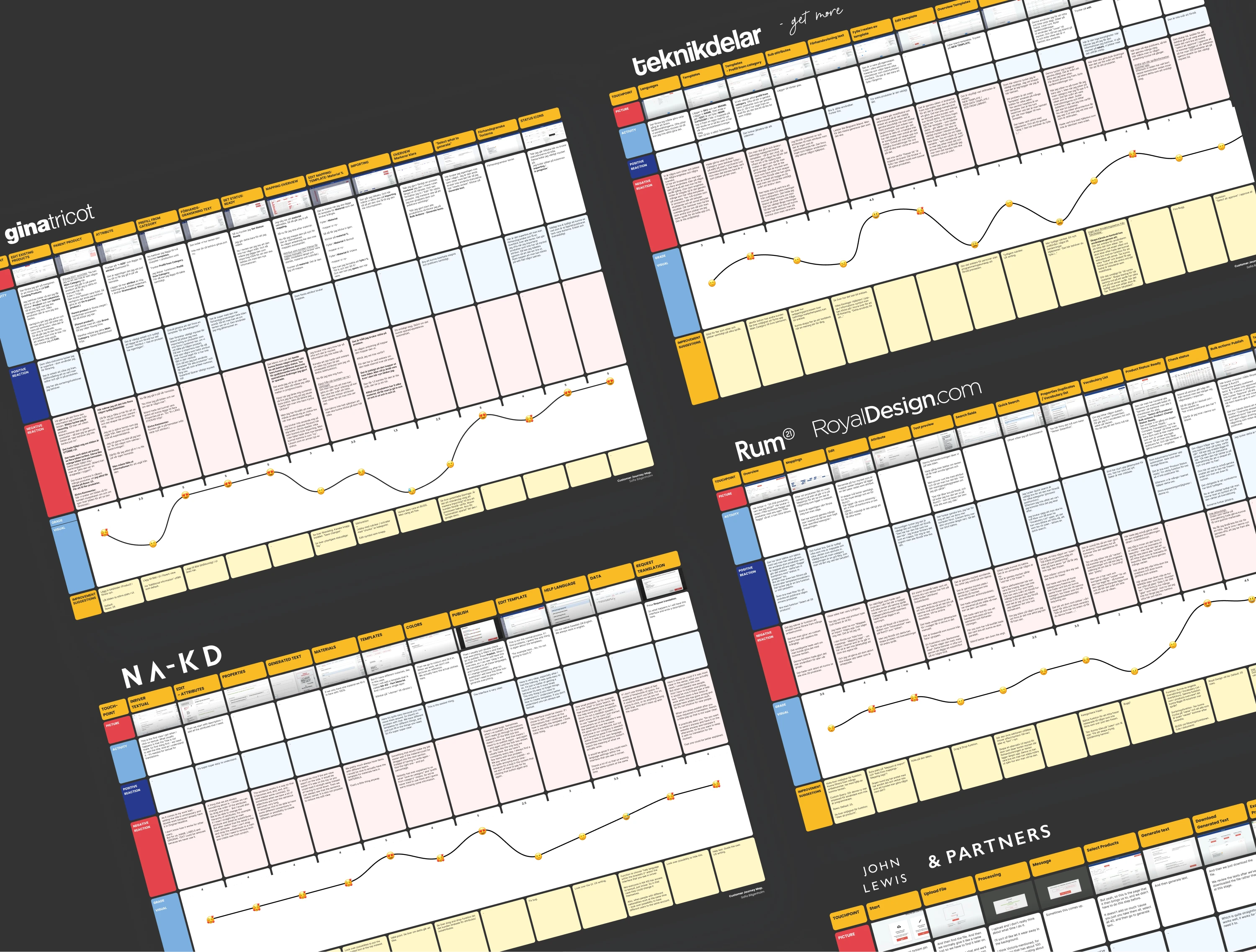
The plan was to create one customer journey map. During the interviews it became clear that every client had a unique workflow, so I switched to one map per client and delivered five.

Each map follows the client’s steps through the tool, with touchpoints, activities, positive and negative reactions and quotes, and ends with concrete improvement suggestions. I sent each map to the Textual team as soon as it was done.

Five customer journey maps, one for each client

Business impact

Immediate improvements

As soon as I finished a journey map, I sent it to the Textual team. Several pain points for multiple clients were fixed within days. Many of the biggest frustrations turned out to be easily fixed bugs or tasks the team could handle quickly.

Customer satisfaction & retention

The interviews gave clients dedicated time to reflect on pain points they usually just lived with:
“I’ve been thinking about telling the Textual team about this matter but I always forget.”
“The Textual team is super helpful but I’m the kind of person who wants to figure it out by myself.”

All interviewed clients were highly positive and appreciated the chance to show their process, which built stronger relations between Textual and its clients.

Clarity for the future

Individual maps gave Textual a clear picture of each client’s process and pain points, so the team can prioritise improvements with client relations and client size in mind.

UX workshop & new branding

At the end of the project I facilitated a UX workshop with the CEO and CSO, where I presented the findings and we discussed ideas for improvements together.

After working for Textual and inside its tool for a few weeks, I had noticed inconsistencies in the brand colours and how they were used across platforms. That discussion led to me helping them with a rebrand and a new web design.

The UX workshop with Textual’s CEO and CSO
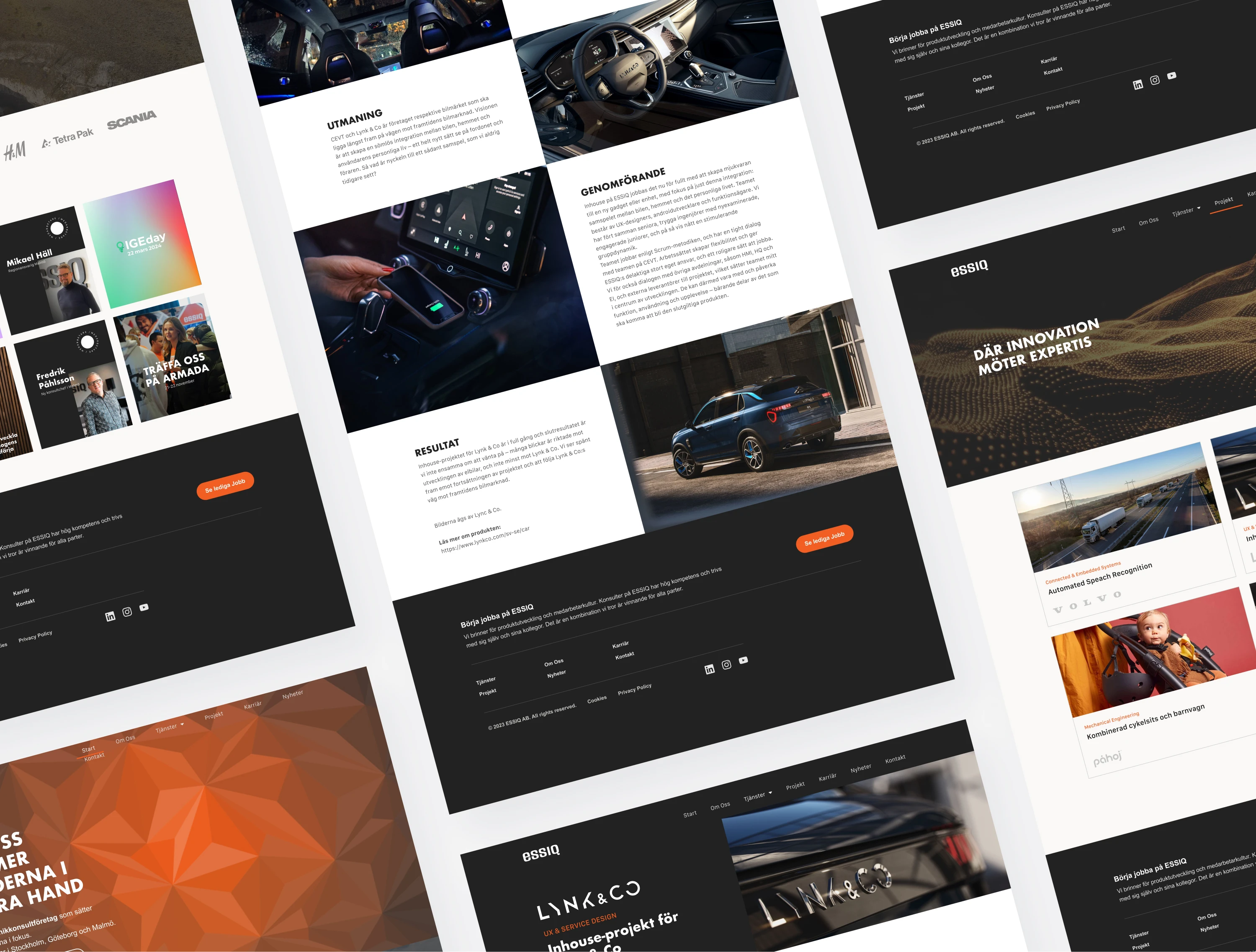
The new Textual website after the rebrand
The follow-up project: a new visual identity and website for Textual.

More projects

See more

Contact

Let’s talk

Do you want more clarity of how your customers use your product? Send me a message and I’ll get back to you.

Sofia Bågenholm

Sofia Bågenholm

Designer & Founder, Polu Design AB

Gothenburg, Sweden / Remote

I only use your details to reply to your message.